
The Home
The style of this home
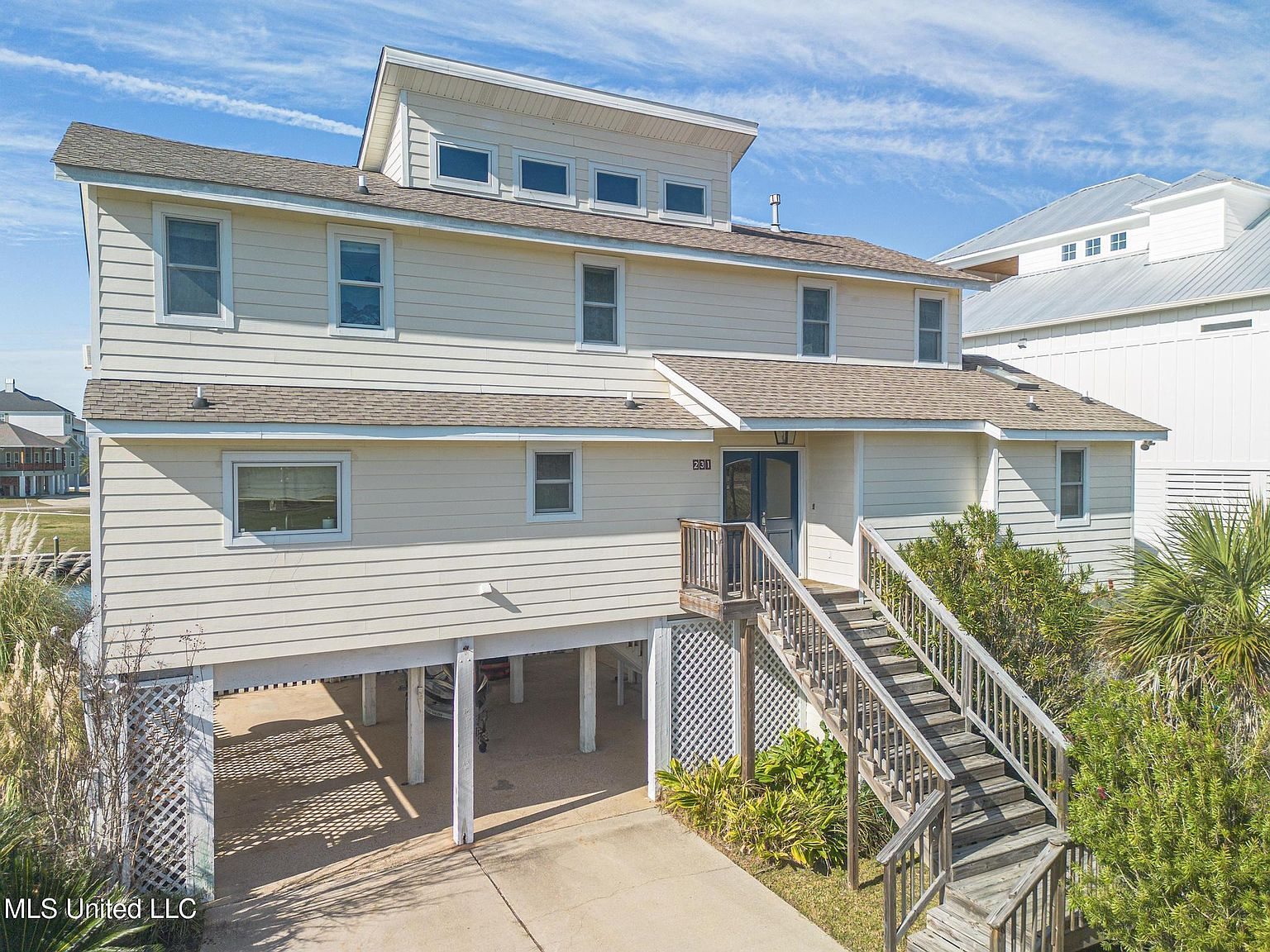
The first thing you notice is the elevation. This is a coastal home built for its environment: raised on sturdy pilings, with covered parking and storage below, living space above. The light yellow lap siding catches the Gulf light differently depending on the hour, and the wooden staircases to the front door feel like the beginning of something.
The architectural read
This is a traditional elevated coastal home, the kind that defines the Mississippi Gulf Coast. The stilted design is not decorative. It is practical: it lifts the living space above the floodplain, provides covered parking and storage at ground level, and creates shaded outdoor space underneath. The proportions are generous without being ostentatious. The home fits its lot and its neighborhood.
The roofline is straightforward and functional. The circular drive at the front provides a sense of arrival. The rear of the home is where the architecture opens up: the deck, the waterfront views, and the connection to the canal are what this house was designed around.
Materials, surfaces, finishes
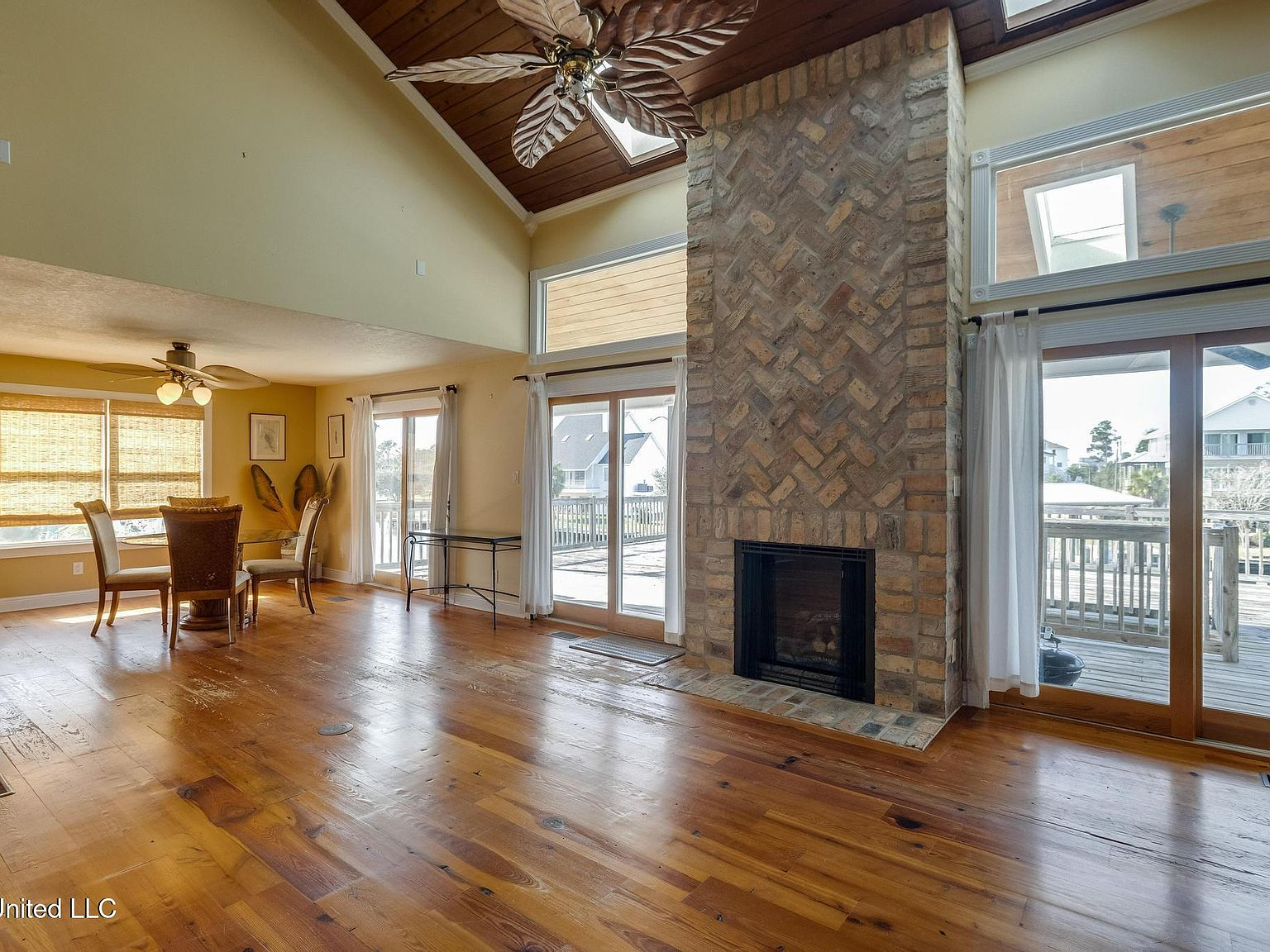
Inside, the material choices tell you someone cared. The great room has vaulted wood-paneled ceilings with skylights, and the floor-to-ceiling brick fireplace uses a herringbone pattern that adds texture without shouting. Hardwood floors run throughout the main level, solid wood interior doors close with a satisfying weight, and the granite countertops in the kitchen are thick enough to feel permanent.
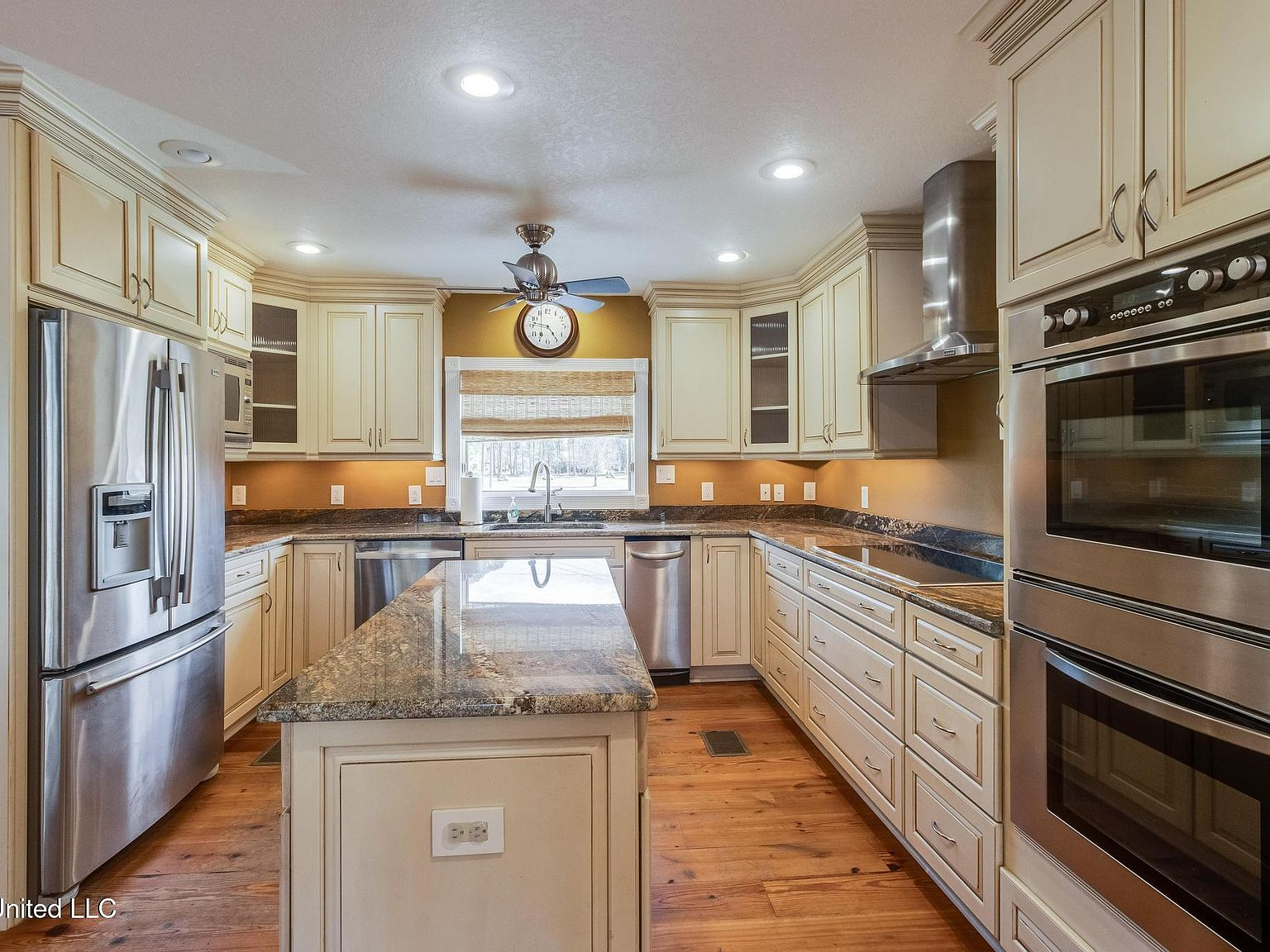
The kitchen is built for actual use: white paneled cabinetry, under-cabinet lighting, an induction cooktop, a center island, and a breakfast bar with brick-facing that ties it back to the fireplace in the great room. The finishes are coordinated without being matching. There is a sense that choices were made here, not just defaults accepted.
Light, air, and the way the rooms breathe
Coastal homes live or die on how they handle light and air, and this one handles both well. The great room has transom windows that pull in light from above. The primary suite opens directly to the waterfront deck, where copper gas lanterns mark the transition from inside to out. Upstairs, the two guest bedrooms get their own light and their own bath. The spa-style primary bathroom has a skylight, an air-jet soaking tub, and a walk-in shower with travertine tile.
The waterfront connection
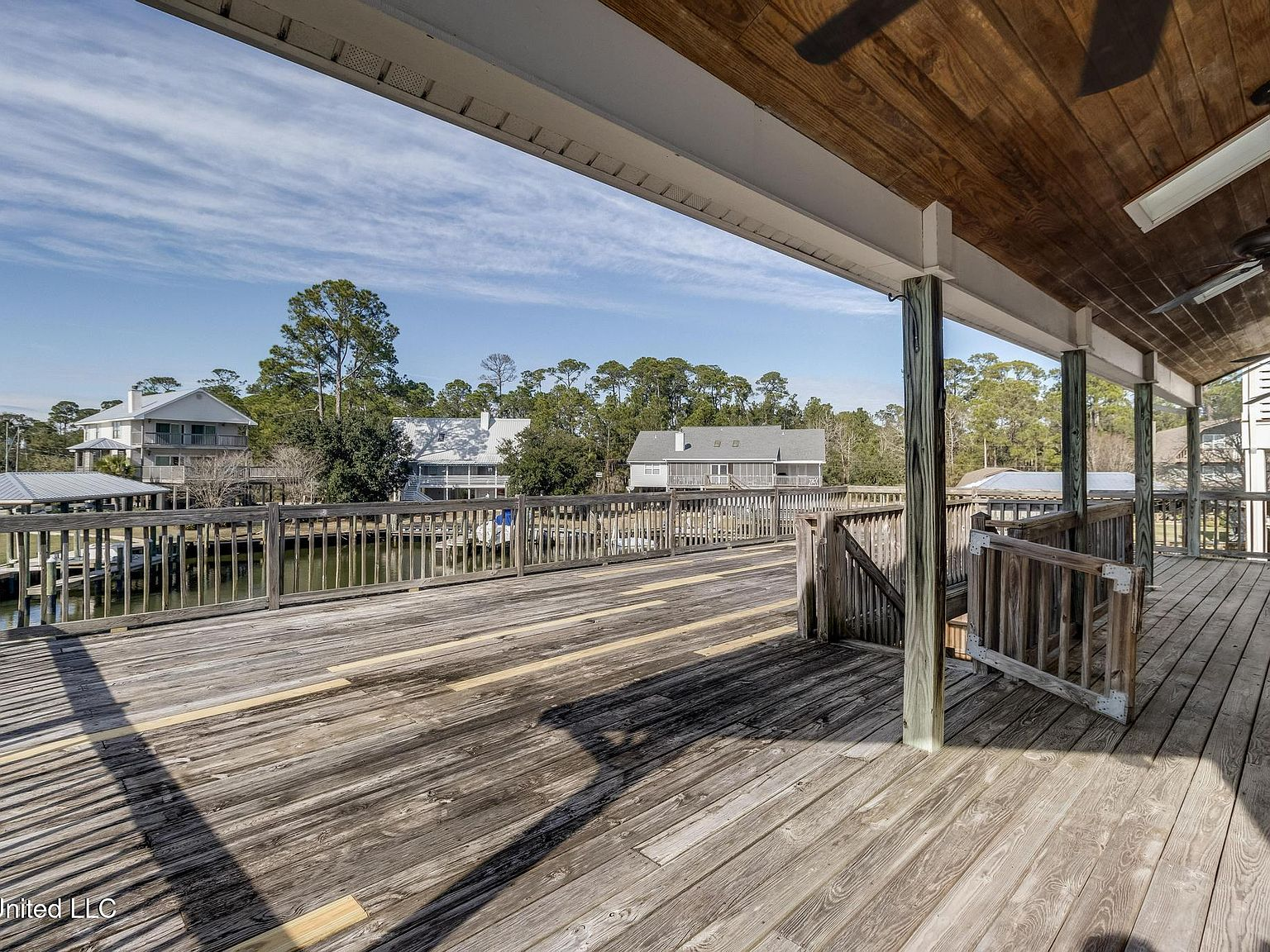
The home's relationship with the water is the design thesis. The covered deck at the rear is where most of the living happens. Ceiling fans move the air. The copper gas lanterns glow at dusk. From the deck you can see the private dock, the canal, and the neighboring homes that have been part of this community for decades. The dock itself is the final detail: bulkheaded, wooden, and built for daily use, not decoration.
Updates that respected the bones
The kitchen has been updated with modern appliances and granite countertops while keeping the cabinetry style consistent with the home's character. A tankless water heater handles the hot water needs. The copper gas lanterns on the deck are a thoughtful upgrade. The bones of the home are original: the vaulted ceilings, the brick fireplace, the solid wood doors, the hardwood floors. The updates are the kind a future buyer does not have to redo.